
ORIGINAL CRITICISM / 13
Charulata
Charulata: “Calm Without, Fire Within”
The Criterion Collection / Current · 20 August 2013Read the original essay
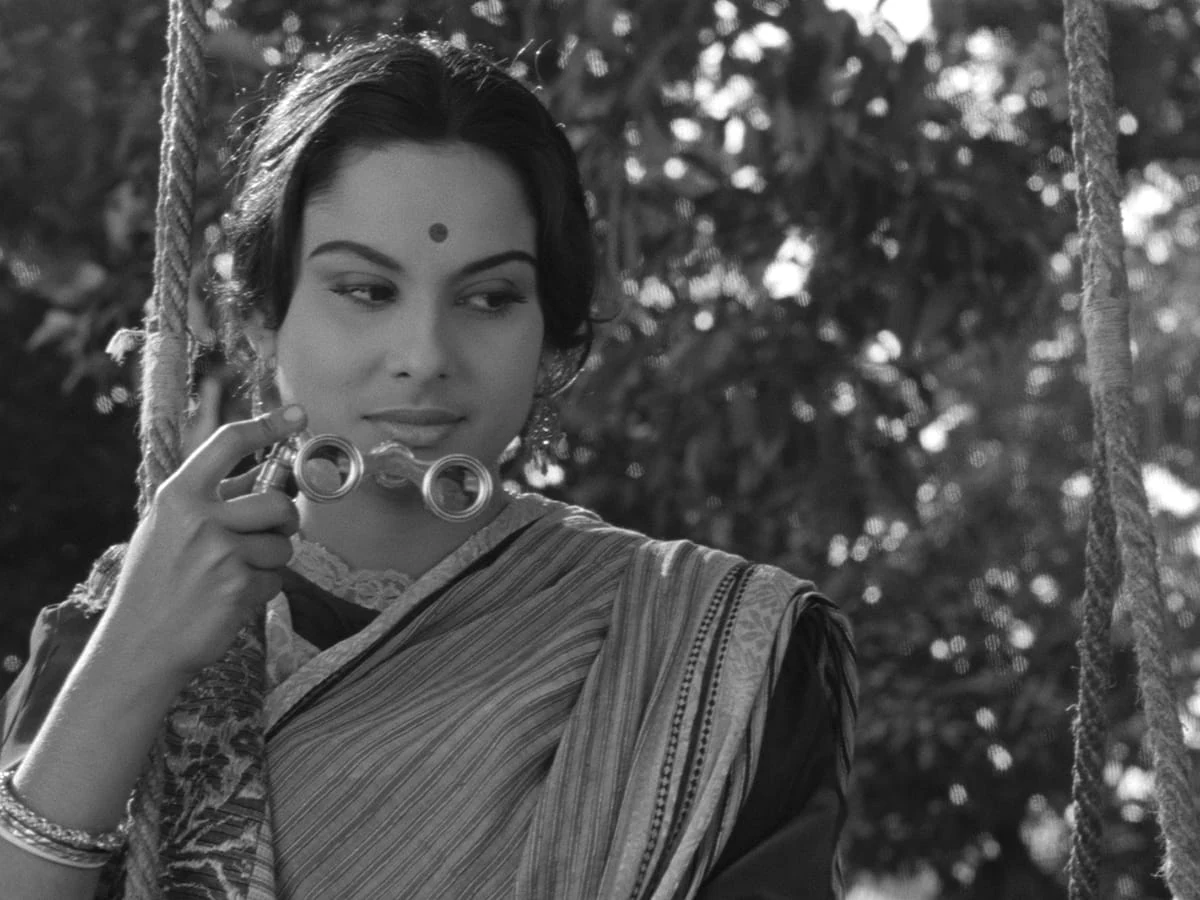
Philip Kemp follows Ray’s capacity to reveal a wider social world inside an intimate household. Charu’s loneliness acquires form through movement, reading, and restricted access to life outside. The nearly wordless opening establishes relations that dialogue need not explain.
In this reading, adapting Tagore involves decisions about looking and motion. Bhupati’s political engagement coexists with his failure to register his wife’s experience. Reducing Charu’s intelligence and literary aspiration to a romantic subplot would diminish that contradiction. Emotional disturbance develops through the restraint of its expression.
EYE/ERROR / AFTER READING
Return to the film
- What relationship does the opera glass establish with the outside world?
- What does one wordless moment communicate that dialogue would change?
CREDIT AND SOURCE
Charulata: “Calm Without, Fire Within”
Philip Kemp · The Criterion Collection / Current · 20 August 2013
Rights in the original criticism belong to its author and rights holders. The original essay is not reproduced on this page.
The Criterion Collection / Current / ORIGINAL ESSAY