
FILM × CRITIC
DIRECT REVIEW / ESSAYIN THE MOOD FOR LOVE × LI CHEUK-TO
How much do we know about what remains unseen?
Alongside Li Cheuk-to’s historical reading, an inquiry into desire, social scrutiny, and the narrative’s withheld spaces.
Original sourcesLi Cheuk-to: In the Mood for Love (2002)Criterion film record: In the Mood for Love (2000)
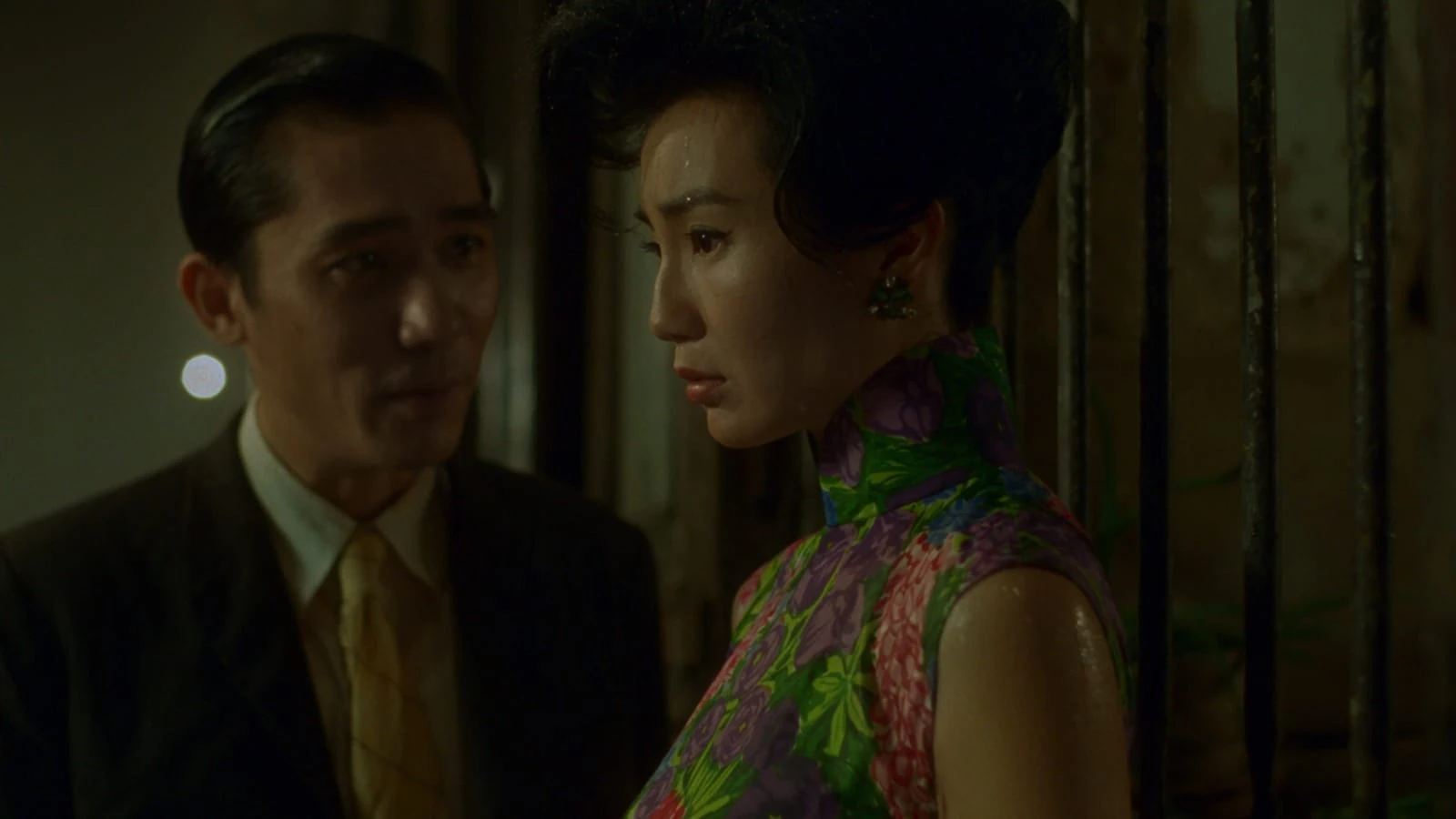
Discussions of In the Mood for Love often turn an unseen event into a settled fact. It is easy to announce what two people never did; distinguishing what the film shows from what it invites us to infer is harder. In Wong Kar-wai’s 2000 film, two neighbours become entangled after discovering a relationship between their spouses. Calling the intimacy that develops simply the beauty of restraint reduces a more difficult interaction among desire, self-description, and the limits of knowledge. Withheld visibility does not by itself establish that something never happened.
Li Cheuk-to’s essay attends to 1960s Hong Kong, the social world of Shanghai immigrants, and the film’s literary connections. That historical grounding matters because treating its beauty as timeless decoration removes the conditions under which people meet. EYE/ERROR proposes reading clothing, housing, and routes through space as arrangements of visibility as well as signs of a remembered period. Who can see whom? Whose return becomes noticeable? Whose conduct can become a subject of talk? Intimacy must find a route through those relationships, rather than occupying a private world outside them.
A concealed relationship need not contain a purely private emotion. Neighbourhood expectations, workplace conduct, and married identities travel with people. Being alone together does not remove social judgment; judgment can return through the characters’ own assessments of what they might do. Instead of classifying restraint immediately as noble or timid, this reading asks which account of themselves the characters want to believe. Trying to understand somebody else’s betrayal and trying to recognize one’s own desire can become entangled activities. An explanation offered as an investigation may acquire a different emotional purpose.
Repetition also exceeds the decoration of a single feeling. A similar encounter or movement can mean something different after new knowledge arrives. When a moment returns in memory, the event itself may remain unchanged while its interpretation shifts. Narrative gaps keep that distinction active. Filling the absent portions, spectators construct a version of the relationship for themselves. Criticism should account for how much that version depends on evidence and how much it borrows from a preferred romantic scenario. An emotionally satisfying explanation is not automatically the most responsible description of what the film permits us to know.
Nor should the beauty of an image be equated with the freedom of the people it contains. An elegant composition can make constraint visually seductive. We can register that attraction while asking whose room to move is diminishing within it. In EYE/ERROR’s reading, the film’s sorrow does not require declaring the past a perfect world. A feeling may be real without acquiring the social conditions or narrative certainty that would turn it into a durable shared life. Memory preserves an attachment without necessarily preserving a complete or mutually agreed account of it.
For filmmakers, an exercise in distributing knowledge can be more useful than borrowing a palette. For one scene, record what the spectator knows, what each character knows, and what all parties merely infer. Remove an explanatory line and test whether the relationship becomes vague or more exact. Obscurity is not the objective. Something can remain unspoken while the human situation becomes precise, provided that behaviour, pressure, and consequences give the gap a definite shape. In a cinema of desire, that discipline of knowing belongs to aesthetic form as much as colour or music does.
Read the original sources
GO DEEPER