
ORIGINAL CRITICISM / 16
Fantastic Planet
Fantastic Planet: Gambous Amalga
The Criterion Collection / Current · 21 June 2016Read the original essay
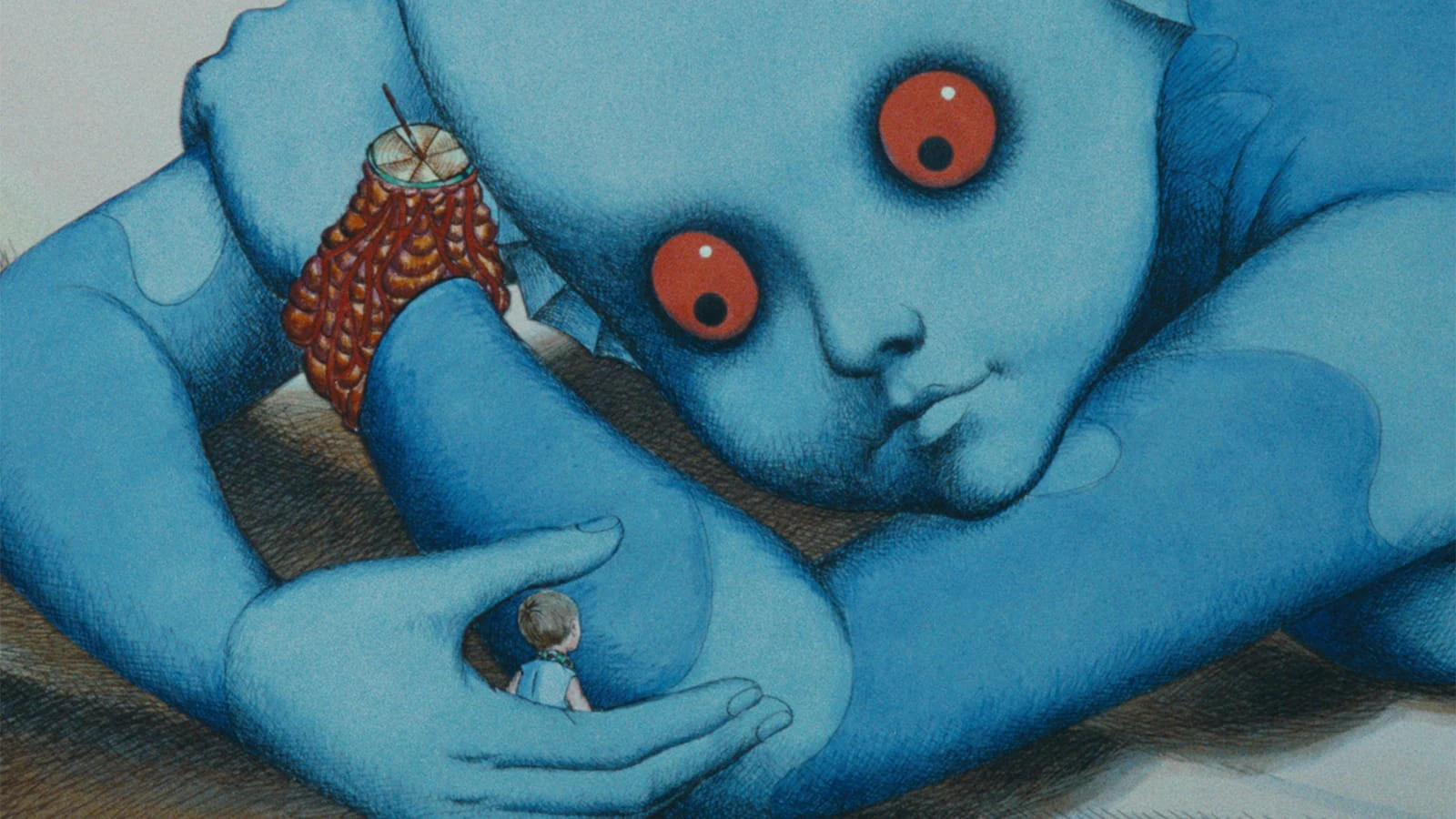
Michael Brooke connects political suggestion with the construction of an unfamiliar world. Treating tiny humans as pets or removable populations makes recognizable domination strange in scale. He does not confine the film to a single political allegory that would exhaust its meanings.
Brooke attends to Roland Topor’s designs, cutout animation, and the organization of sound. A distinctive universe emerges through resourceful material choices. The French-Czechoslovak production history gives that achievement concrete conditions. Imaginative freedom is connected to collaboration and technique rather than separated from them.
EYE/ERROR / AFTER READING
Return to the film
- How does a difference in scale make familiar behavior disturbing?
- How do design and sound make an unfamiliar creature convincing?
CREDIT AND SOURCE
Fantastic Planet: Gambous Amalga
Michael Brooke · The Criterion Collection / Current · 21 June 2016
Rights in the original criticism belong to its author and rights holders. The original essay is not reproduced on this page.
The Criterion Collection / Current / ORIGINAL ESSAY