
ORIGINAL CRITICISM / 12
Cléo from 5 to 7
Cléo from 5 to 7: Passionate Time
The Criterion Collection / Current · 21 January 2008Read the original essay
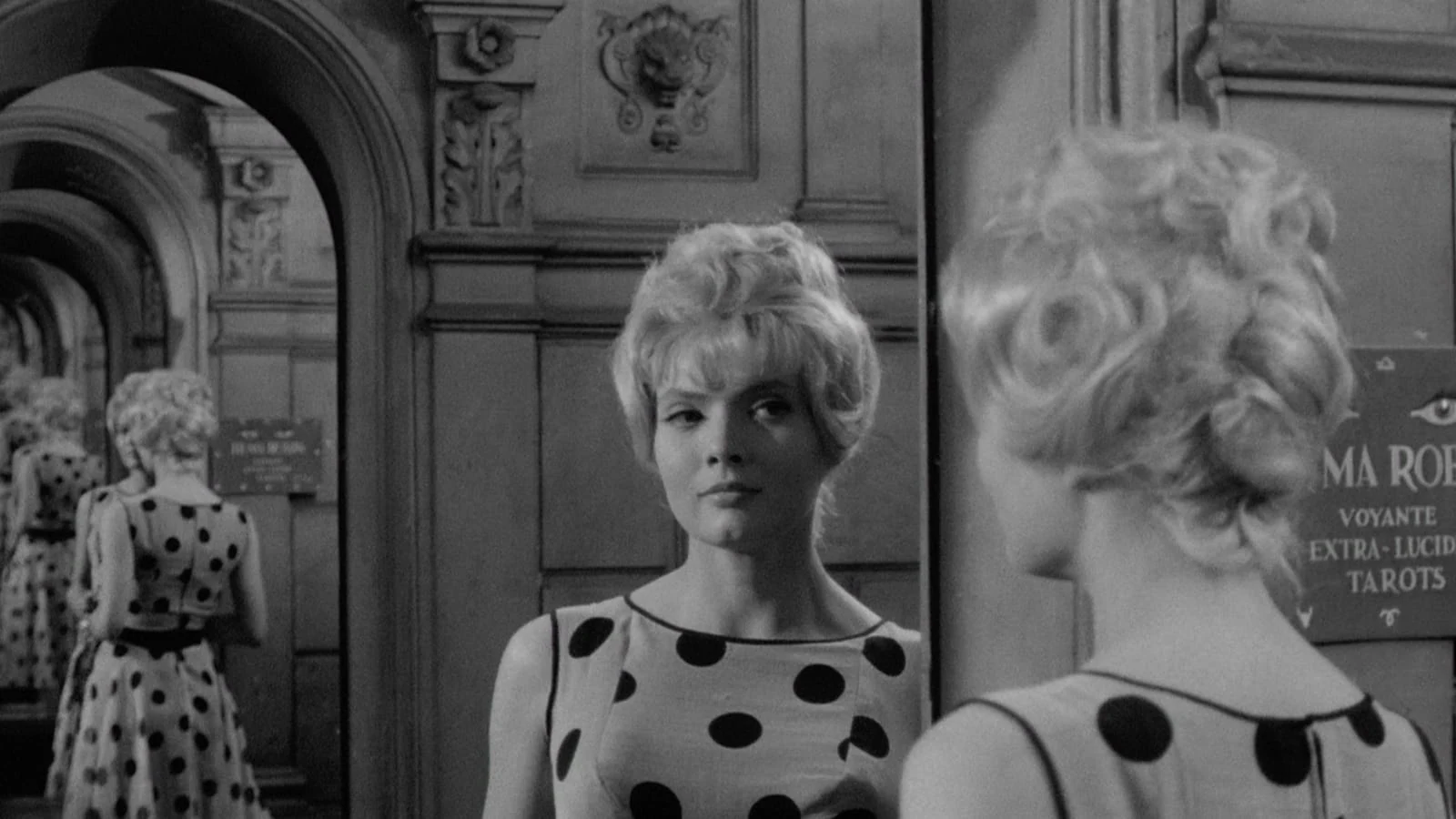
Adrian Martin values Cléo’s changing experience beyond the challenge of preserving clock time. Continuity does not require an uninterrupted take. Editing gives anxiety a rhythm: Paris is both a recorded environment and a world shaped by feeling.
Martin notes that Varda refuses to make Cléo an ideal heroine securing uncomplicated sympathy. Vanity complicates her fear. The film’s freedom emerges within temporal constraint through shifting relations among a woman, a city, and her attention.
EYE/ERROR / AFTER READING
Return to the film
- When does equal clock time feel longer or shorter?
- When does Cléo shift from being watched toward looking outward?
Martin’s essay calls the film a 1961 work; the year here follows Criterion’s film catalogue, which lists 1962.
CREDIT AND SOURCE
Cléo from 5 to 7: Passionate Time
Adrian Martin · The Criterion Collection / Current · 21 January 2008
Rights in the original criticism belong to its author and rights holders. The original essay is not reproduced on this page.
The Criterion Collection / Current / ORIGINAL ESSAY